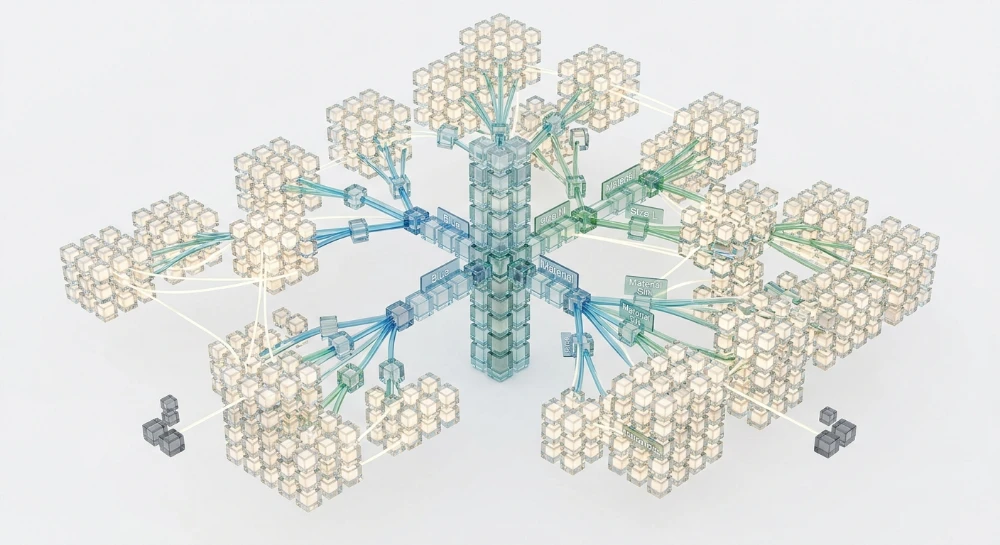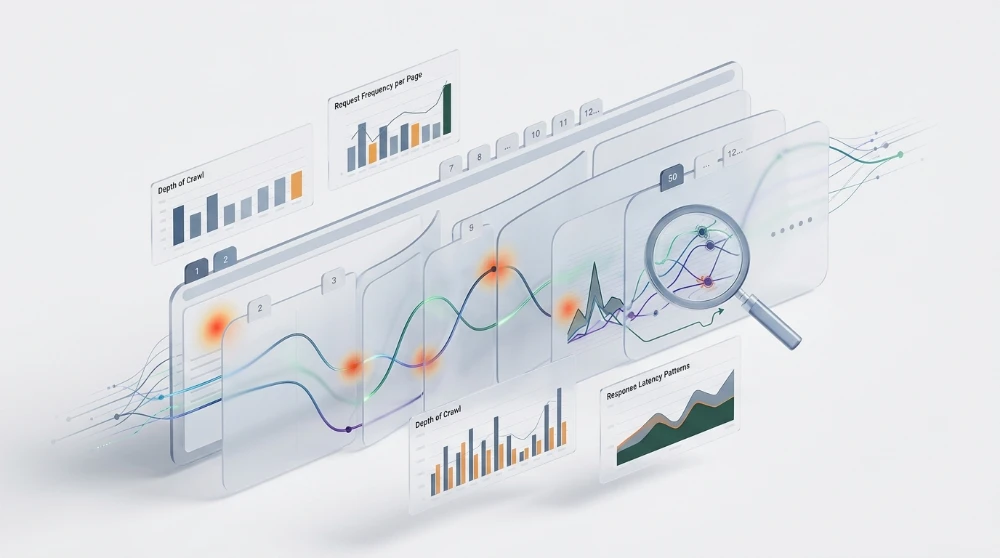
Analyzing bot actions on a paginated series matters for 10 pages deep because sequential linear chains inherently waste crawl budget and orphan downstream product nodes. E-commerce platforms with massive inventory datasets structurally force Googlebot into an O(n) linear progression through standard pagination links. Search engine bots routinely terminate their traversal before reaching depth level 10. This architectural bottleneck directly limits URL indexation and suppresses organic CTR for long-tail inventory.
The internal link equity dissipates completely.
Server log parsing provides the exact termination point. Engineers extracting Apache or Nginx access logs filter HTTP GET requests by the Googlebot User-Agent to map the precise crawl depth limitation. A standard log file analysis reveals that crawl frequency drops exponentially after the fourth or fifth pagination increment. Data extracted via the Google Search Console API confirms this exact drop-off point. Migrating from an O(n) linear structure to an O(log n) internal linking model initiates structural remediation.
Flattening the site architecture requires specific engineering parameters. Implementing mid-point anchors and extreme-skip navigation mechanisms inside the HTML structure bypasses the sequential click requirement entirely. Analyzing Server Response Time and TTFB metrics against crawl throttling triggers isolates the exact server load strain causing bot abandonment. Proper log parsing identifies 5xx HTTP status codes and URL parameter combinations that trap bots in infinite loops before they can evaluate the core product pages.
Architectural limitations of sequential linear chains
Standard pagination mechanics force a rigid sequential crawl path. Enterprise platforms relying exclusively on Next and Previous parameters construct an O(n) linear chain. Every generated pagination node adds a strict positive increment to the overall click depth. A product category housing 5,000 items rendered at 50 products per page generates exactly 100 sequential URL nodes. Search engine crawlers must execute 100 consecutive HTTP requests in a flawless chronological sequence just to discover the final set of items. The math simply does not scale. This structural dependency guarantees severe indexing attrition for deep inventory.
O(n) indexing efficiency degrades predictably as catalog dimensions expand. Linear traversal requires the crawler to load and parse every preceding document to access depth N. O(log n) internal linking models deploy logarithmic distribution paths to bypass this requirement entirely. An O(log n) architecture allows a bot to reach node 100 in two or three hops instead of 100 consecutive clicks. Mathematical efficiency directly dictates the survival rate of downstream inventory in the search index.
Comparing traversal complexity reveals the exact processing cost of linear pagination on massive catalogs.
| Architecture Model | Traversal Complexity | Click Depth to Node 100 | Deep Node Indexing Probability |
|---|---|---|---|
| Sequential Linear Chain | O(n) | 100 | Negligible |
| Logarithmic Distribution | O(log n) | 2 to 4 | Optimal |
Click depth expansion metrics quantify the precise distance from the category root to the target destination. Sequential setups expand this metric linearly without limits. Category Pagination exceeding 10+ navigation level limits triggers immediate site hierarchy strain. Bots operate under strict, finite resource constraints per domain. Confronted with single-file navigation chains stretching 20, 50, or 100 levels deep, crawlers systematically abandon the traversal to preserve capacity.
Pushing pagination structures past depth level 10 introduces critical architectural failures across the domain.
- Severe internal equity dilution across all downstream product URL nodes.
- Exponential increase in orphan URL status for inventory located beyond page 10.
- Systematic degradation of topical relevance signals connecting deep items to the root category.
- Complete dependency on XML sitemaps for discovery rather than contextual HTML structures.
Maximum crawl depth thresholds define the absolute limit of bot penetration. Server logs consistently prove bots rarely evaluate URLs located past depth 10 in standard linear configurations. Massive catalogs pushing millions of product permutations through a single sequential bottleneck experience catastrophic hierarchy strain. Products residing at depth 15 technically exist within the CMS architecture but remain functionally invisible to the external indexing pipeline. The linear chain isolates the deep nodes, starving them of both initial discovery and ongoing ranking signals.
Run a deep technical crawl to identify 4xx errors, missing meta tags, and indexation blockers.
Log file extraction and pre-processing protocols
Diagnosing depth-related architectural failures requires raw server data. Third-party crawlers simulate site architecture traversal. Server logs record actual bot behavior. To capture this activity across massive category hierarchies, engineering teams must configure automated extraction pipelines from both edge network nodes and origin servers. Unifying this data provides the baseline for identifying exact abandonment thresholds.
Edge nodes intercept routine bot traffic before it reaches the origin. Relying exclusively on Apache or Nginx access logs creates massive blind spots. Cloudflare Logs provide complete visibility at the network edge. Enterprise environments must route these edge logs directly into secure cloud buckets via automated push protocols. Origin servers require parallel extraction jobs pulling directly from local directories. Disparate log structures break automated ingestion pipelines immediately. Standardizing Access Logs formats bridges the gap between varying server architectures.
Mapping extraction source configurations guarantees uniform data ingestion across distributed server environments.
| Log Source | Native Format | Standardization Requirement |
|---|---|---|
| Cloudflare Logs | Structured Data | Flatten nested fields, map edge request paths to standard request URI fields. |
| Apache | Combined Log Format | Extract exact timestamp strings, separate HTTP protocol from the request path. |
| Nginx | Default Access Format | Align client IP and status code positions to match the modified Apache schema. |
Parsing the User-Agent String dictates the integrity of the entire dataset. Spoofed crawlers aggressively hit e-commerce categories and generate false positives within the server logs. Initial filtering requires matching exact signature strings to isolate Googlebot and other major search engine bots. True verification demands reverse lookup processes downstream, but the extraction phase relies on precise RegEx to drop non-essential traffic immediately.
Implement strict RegEx patterns to isolate primary crawler activity within the pre-processing layer.
.*(?:Googlebot|bingbot|YandexBot|Baiduspider)\/.*Unfiltered server data scales into terabytes rapidly. Processing this raw output wastes compute resources. Pre-processing layers must aggressively filter out noise before the dataset reaches the database ingestion phase. Isolating pagination crawl behavior requires precise targeting of specific network actions and server responses.
Configure the pre-processing pipeline to drop log records failing these specific operational parameters.
- HTTP Method GET: Restrict data strictly to GET requests. Drop POST, HEAD, and OPTIONS calls. Bots evaluate and traverse sequential pagination links exclusively via GET requests.
- 200 vs 5xx HTTP Status Code: Retain 200 OK responses to track successful category page retrievals. Isolate 5xx errors to monitor server infrastructure strain under heavy bot traversal. Discard 3xx redirects and 4xx client errors during this specific structural analysis.
- URL Path parameters: Strip out all static asset requests including images, scripts, and stylesheets. Filter the remaining data to isolate target paths containing specific pagination query strings or directory structures denoting deeper category levels.
Isolating the log dataset down to verified search engine bots executing GET requests on valid HTML category pages clears the noise. The standardized data stream now accurately reflects the true traversal limits of external crawlers attempting to navigate the linear chain.
Crawl rate graphing and drop-off point identification
The standardized log dataset now requires a visualization layer to expose structural traversal limits. Push the filtered records into an enterprise log analysis platform like Botify Log Analyzer or a custom ELK stack. A standard ELK configuration requires Logstash to parse the cleaned text files, Elasticsearch to index the URL strings and timestamps, and Kibana to render the dashboards. Map the extracted pagination query parameters to a custom integer field in Elasticsearch. This integer represents the exact depth level of each logged URL.
Plot the crawl rate graph directly against pagination depth increments. Set the X-axis to represent the sequential page number extracted from the URL structure. Set the Y-axis to represent the absolute volume of bot hits over a rolling evaluation window. The resulting visualization maps the decay curve of bot progression. It visually flags the exact page number where bot traversal halts.
Measuring frequency and active pages
Raw hit counts only outline the surface issue. You must measure the crawl frequency per pagination tunnel. Group the log data by the base category URL to isolate individual paths. Calculate the average time interval between bot requests for page 2, page 3, and subsequent sequential increments within that specific tunnel.
Track these core metrics across each isolated tunnel to pinpoint the exact structural threshold where search engines abandon the series:
- Crawl frequency: The mathematical average of days between bot visits to a specific paginated depth tier.
- Active pages rate: The percentage of URLs at a specific depth tier that received at least one verified bot hit in the analyzed timeframe.
- Stale node ratio: The volume of URLs deeper than level 10 reporting zero server hits over a prolonged period.
Analyze the rendered graph. A steep drop-off routinely materializes between specific depth levels. The active pages rate plummets. Crawl frequency stretches from daily hits to weeks or months. This is the exact bottleneck where the sequential architecture fails the indexing engine.
Data correlation via API extraction
Server logs document what bots request. They lack the diagnostic context of how the platform categorizes the crawl phase. Extract the Crawl Stats Report data directly via the Google Search Console API to cross-reference system diagnostics. The API delivers host-level status outputs that validate the log file drop-off points.
Map the server-side log variables against the corresponding API outputs to confirm traversal termination.
| Diagnostic Metric | ELK Stack Output | Crawl Stats API Endpoint |
|---|---|---|
| Discovery Volume | Total GET requests per depth tier | Total crawl requests by purpose (Discovery) |
| Refresh Rate | Crawl frequency per tunnel | Total crawl requests by purpose (Refresh) |
| Status Verification | 200 OK responses vs 5xx errors | Crawl requests by response code |
Pull the API data payload and overlay it onto the Kibana depth graph. Look for the exact depth tier where the API reports a shift from refresh crawls to zero discovery activity. If ELK registers zero bot hits at page 12, and the API confirms a drop in overall discovery crawl volume for that specific category directory, the structural termination point is verified. The linear chain is broken. Analytics now definitively prove which deep nodes search engines refuse to process.
SEO structure and reciprocal link analyzer
Detect orphan pages, deep click depths, and toxic reciprocal links built by careless agencies.
Server load strain and crawl throttling triggers
Search engines treat deep architectural traversal as a secondary priority. When bots request paginated series beyond standard depths, they execute resource-heavy offset queries against the database. These downstream pages require the server to process massive data arrays before rendering the HTML. Processing overhead directly dictates traversal efficiency.
Crawl throttling is a mathematical certainty when infrastructure fails to handle concurrent heavy queries.
Analyze the correlation between elapsed server response time and automated crawl reduction. Search engines continuously monitor TTFB during their traversal loops. When TTFB degrades on deep nodes, algorithmic safeguards engage. The crawler registers the latency as a signal of server strain and actively reduces parallel crawling execution to prevent infrastructure outages.
URL parameter management and faceted explosion
Pagination rarely exists in a vacuum. E-commerce category pages typically feature robust filtering systems that rely on query strings. URL parameter management failures rapidly compound server strain.
A Faceted Explosion occurs when standard sequential chains intersect with unconstrained dynamic filters. Bots encounter links appending sorting rules, color variations, and sizing to deep pagination URLs. This creates a combinatorial explosion. The infrastructure attempts to process thousands of simultaneous combinations.
- Session identifiers appended to pagination parameters force cache bypass execution.
- Multi-select filters generate non-standard URL sequences that trigger redundant database lookups.
- Sorting directives combined with deep depth indicators create infinite loop requests without distinct payload variations.
Massive crawl budget waste occurs on these downstream pages. The bot expends its allocated processing time parsing infinite permutations of a single category matrix. It abandons discovery protocols entirely. Infrastructure constraints force termination before the system reaches distinct structural endpoints.
Resource allocation constraints and parallel execution
High latency degrades the fundamental capacity for concurrent connections. Parallel crawling execution relies on available server threads handling rapid, successive GET requests. Prolonged elapsed time per query locks connection pools.
| Response Time Threshold | Server Connection State | Crawl Throttling Impact |
|---|---|---|
| Sub-200ms | Optimal thread allocation | Maximum parallel execution maintained |
| 500ms - 1500ms | Thread queuing initiated | Gradual reduction in concurrent bot requests |
| Above 2000ms | Connection pool exhaustion risk | Aggressive throttling and immediate traversal drop-off |
Examine the access logs specifically targeting parameter-heavy deep URLs. Identify the precise TTFB where the HTTP requests shift from parallel concurrent hits to isolated, sequential pings. This shift pinpoints the exact server response threshold triggering the throttling algorithms. System architectures failing to deliver downstream HTML payloads under these critical latency thresholds guarantee traversal failure.
The combination of complex offset database queries, unmanaged parameter permutations, and rising TTFB creates an impenetrable structural barrier. The search engine enforces an artificial crawl ceiling.
Structural remediation flattening the graph and jump link logic
Standard sequential navigation creates deep architectural trenches. You need to pull downstream nodes closer to the root. Flattening the graph requires rebuilding the pagination array to slash the click path from O(n) to O(log n) efficiency. This structural remediation forces bot paths directly into deep data clusters without relying on adjacent traversal.
Stop feeding bots one page at a time.
Jump link strategy and Extreme-Skip nav
A linear progression of page one, page two, and page three guarantees crawl exhaustion before reaching deep category inventory. Deploy a Jump Link Strategy to inject non-linear pathways directly into the pagination component. An Extreme-Skip Nav architecture introduces exponential interval spacing. Instead of just adjacent links, the interface provides anchors to specific distant boundaries to shatter the sequential bottleneck.
- Adjacent nodes: Steps of 1 to maintain local sequential access
- Mid-range leaps: Steps of 10 or 20 for regional traversal
- Extreme boundaries: Direct anchors to the 50th or 90th percentile of the total query result set
Midpoint Link architectures divide the total dataset in half. If a category yields 100 pages, the root injects an anchor directly to page 50. From page 50, the algorithm calculates new midpoints pointing to 25 and 75. The bot leapfrogs massive URL blocks. Crawl paths shrink logarithmically.
HTML anchors structural requirements
JavaScript-rendered offset clicks fail standard crawler evaluation. Structural remediation demands raw HTML href attributes. Bidirectional linking must be hardcoded into the DOM structure for both forward and backward traversal.
| Component | Implementation Requirement | Architectural Purpose |
|---|---|---|
| Forward Jump Anchors | Static URL path parameters appended to standard query strings | Provide immediate downward traversal bypassing intermediate nodes |
| Bidirectional Return | Absolute path anchors pointing back to the specific parent Category Root | Prevent crawl traps by securing a direct exit route to the top-level hierarchy |
| State Maintenance | Consistent URL structures retaining applied facet filters across skip states | Preserve cluster context during deep exponential leaps |
Relying on onClick events for these leaps breaks the extraction pipeline. Ensure the server delivers these anchors within the initial HTML payload.
Internal equity distribution algorithms
Compute internal link signals variance when transitioning away from sequential pagination. Linear models hoard equity at the root node and rapidly decay value by depth 4. Upgrading to O(log n) models redistributes this equity across a wider horizontal plane. The jump links act as high-capacity conduits. Value transfers directly to depth 50 in a single hop.
Optimize internal equity distribution algorithms by mapping the exact anchor density per page. Overloading the DOM with 50 pagination links dilutes the per-link value passed to the product nodes. Cap the pagination block at a calculated threshold. A standard configuration uses 7 to 10 strategically calculated exponential jump links. This precise allocation balances rapid traversal capacity against link equity preservation for the actual downstream assets.
Calculate true internal PageRank distribution based on your exact site architecture to identify authority hubs.
Indexation control and canonicalization for deep nodes
Deploying canonical tags across deep pagination series dictates how index clusters process subordinate nodes. Forcing a rel="canonical" directive from depth level 20 back to the Category Root collapses the extraction path. Search engine bots treat the directive as a consolidation signal. The downstream product URLs lose their primary discovery conduit and drop from the active processing queue.
Implement self-referencing canonicals on every paginated node. Page 50 must canonicalize to page 50. This explicitly instructs the parser to treat the node as a unique structural asset rather than a duplicate of the root. Structural integrity demands that every node exists as a distinct entity in the crawl graph.
Directive configuration for intermediate nodes
Non-valuable intermediate nodes require aggressive indexation control at the server level. Injecting the X-Robots-Tag HTTP header intercepts the bot before it parses the DOM. Use this method to strip low-value combinatorial states from the index while maintaining the traversal paths.
Configure the web server to append the
noindex, follow
directive to specific URL patterns. Target sorting parameters, view toggles, and empty facet intersections. Search engines interpret long-term noindex directives as nofollow over time. Counteract this decay by keeping the primary exponential jump links outside these restriction zones.
location ~* \.(php|html)$ {
    if ($arg_sort) {
        add_header X-Robots-Tag "noindex, follow";
    }
}
This server configuration block enforces the logic at the response header phase. The bot processes the rejection immediately. Server resources are spared from full DOM rendering for these specific non-valuable query strings.
Parameter exclusion logic
Crawl waste accelerates exponentially when dynamic parameters append to deep series URLs. Session IDs, tracking variables, and multi-select facet strings create near-infinite URL variations. Block these execution traps at the network edge using strict Robots.txt exclusion rules.
| Parameter Category | URL Target Pattern | Robots.txt Directive | Architectural Impact |
|---|---|---|---|
| Session State | ?sid=, &session= | Disallow: /*?*sid= | Terminates infinite crawl loops generated by unique user identifiers |
| Sorting Modifiers | ?sort=price, &order=asc | Disallow: /*?*sort= | Prevents indexation of duplicate product arrays with altered sequencing |
| Display Toggles | ?view=grid, &layout=list | Disallow: /*?*view= | Consolidates equity into a single canonical UI presentation |
| Faceted Combinations | ?color=red&size=xl&brand=x | Disallow: /*&size=*&brand= | Restricts access to depths exceeding three simultaneous filter parameters |
A poorly configured Robots.txt file leaves the parameter handling ambiguous. Bots will attempt to crawl every mathematical permutation of the active filters. Explicitly deny access to parameter combinations that yield thin or duplicate output arrays.
Normalization rules for hybrid architectures
Hybrid systems combine server-side rendering with client-side state changes. A single user action triggers an asynchronous fetch while altering the URL via the History API. This disconnect generates duplicate paths for identical payload states.
Establish strict URL normalization protocols at the application layer. Strip trailing slashes, enforce lowercase characters, and sort query parameters before the server processes the request. The backend must enforce a singular rigid syntax.
-
Parameter Sorting: Rewrite
?size=large&color=redto?color=red&size=largeglobally based on exact alphabetical indexing. - Case Forcing: Reject mixed-case parameter values by executing an automatic 301 redirect to the standardized lowercase URL string.
-
Empty Key Elimination: Strip trailing equal signs and empty parameters such as
?category=shirts&color=from the routing request. -
Pagination Syntax Consolidation: Map inconsistent query strings like
?p=5and?page=5to a unified path structure like/page/5/.
Failing to normalize these strings before they reach the CDN cache forces the origin server to generate identical HTML payloads multiple times. The crawl budget is depleted on redundant data retrieval. Strict normalization limits the bot to a single canonical path for every distinct dataset.
Validation of product discovery and Long-Tail coverage
Structural remediation demands strict quantitative validation. Deploying jump links and flattening the architecture serves no purpose if search engine bots continue to ignore deep inventory. Verify that target URLs structurally located beyond depth 10 are now actively crawled, indexed, and rendering impressions in the SERP.
Analytics configurations require an immediate shift from category-level monitoring to item-level discovery rates.
Analytics parameters for product discovery
Isolate specific analytics parameters to measure index coverage improvements for previously orphaned content. Standard traffic reports obscure deep inventory performance by aggregating data at the directory level. Configure custom filters to isolate traffic solely hitting product pages that resided at depth 11 or higher under the legacy sequential pagination model.
- First-Touch Indexation: Log the timestamp of the initial organic session for historically zero-traffic URLs.
- Active Page Ratio: Calculate the percentage of total catalog URLs registering at least one organic click within a defined rolling window.
- Long-Tail Query Volume: Monitor the aggregate count of distinct search queries triggering impressions for deep-node products.
Server log extraction and frequency calculation
Extract server logs 14 to 28 days post-deployment to calculate long-tail value URL crawl frequency post-remediation. Filter the access logs specifically for product URLs previously classified as unreachable. Calculate the exact crawl frequency interval to identify the rate of sustained bot engagement.
| Crawl Metric | Pre-Remediation (Linear Model) | Post-Remediation (Flattened Model) |
|---|---|---|
| Deep URL Crawl Frequency | Zero or highly erratic | Consistent daily or weekly hits |
| Orphaned Content Discovery | Stagnant | Active processing |
| Crawl Resource Allocation | Concentrated at category root | Distributed across long-tail URLs |
A successful transition to a flattened architecture reflects immediate dispersal in bot requests. Search engine bots stop bottlenecking at the primary category root and begin processing the deep long-tail URLs.
Indexation clarity via crawl depth reporting
Analyze indexation clarity via Screaming Frog Crawl Depth report integration. Execute a fresh structural crawl using the updated jump link architecture. Map the updated structural depth of every URL against its current indexation status extracted via the API.
This integration exposes the mechanical correlation between click depth reduction and indexation probability.
Filter the Screaming Frog output to isolate URLs that shifted from depth 15 down to depth 3 or 4. Cross-reference this dataset against index coverage metrics. The specific delta between previously excluded URLs and those newly classified as indexed quantifies the success of the structural remediation.
Organic search performance metrics
Crawl frequency requires correlation with actual visibility. Track organic search performance metrics for target URLs located structurally beyond depth 10. Extract performance data via the API to bypass interface sampling limits. Isolate exact-match metrics for impressions, CTR, and average position.
Deep product pages typically target highly specific, low-volume queries. Aggregate the performance of these long-tail keywords. An upward trajectory in total impressions across a massive subset of deep URLs proves the search engine has crawled the previously orphaned content and assigned it ranking value based on the optimized internal link equity distribution.