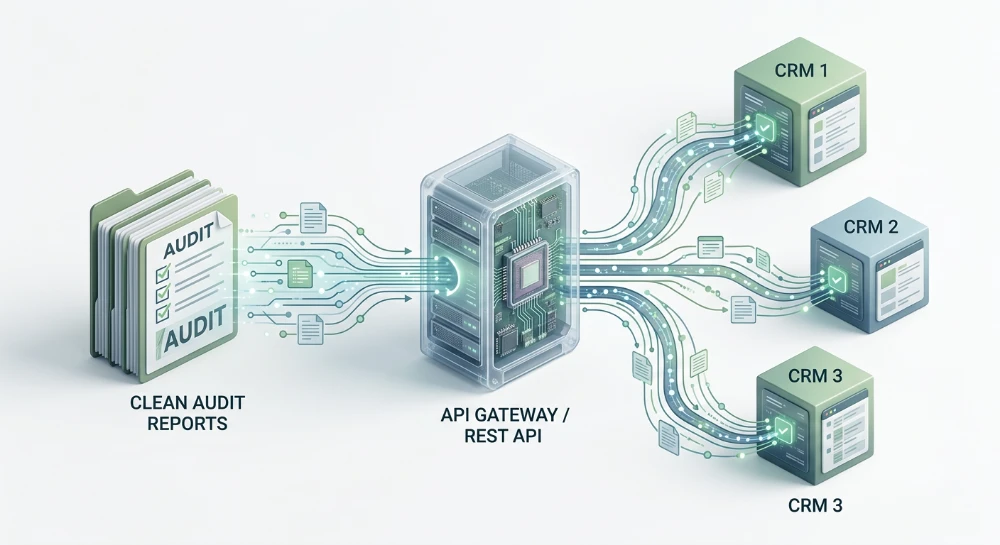
Understanding exactly why bulk checks of authority for a domain need endpoints of Ahrefs API dictates the entire data engineering approach to programmatic prospect evaluation. Manual execution fails at scale. Extracting precise Domain Rating metrics across thousands of rows forces a structural transition away from the Ahrefs Site Explorer interface toward automated API architectures.
Standard browser-based batch analysis caps limits at exactly 200 URL inputs per query. Enterprise SEO campaigns demand processing tens of thousands of domains simultaneously to calculate accurate donor value scores without encountering interface rendering delays.
Deploying this high-throughput pipeline relies on strict technical prerequisites.
- Integration of Ahrefs API v3 routing parameters for targeted programmatic data retrieval.
- Implementation of OAuth 2.0 authentication protocols managed through secure Bearer token generation.
- Deployment of parsing algorithms engineered to structure JSON response payloads for direct database injection.
Architecture of Ahrefs API v3 for bulk data retrieval
Transitioning from the visual Batch Analysis interface to a programmatic pipeline fundamentally restructures how servers handle data requests. The legacy approach of relying on synchronous browser rendering introduces a critical bottleneck when evaluating massive datasets for Domain Rating. Interface latency degrades performance. Adopting the Ahrefs API v3 REST API architecture allows systems to execute direct network routing, entirely bypassing client-side processing overhead.
The system operates on a stateless framework optimized for high-volume metric extraction. Data retrieval executes strictly via GET request methods. Instead of uploading static files to a web portal, servers transmit encoded query strings directly to the specific metric endpoints. This shift eliminates the architectural flaw of relying on local browser memory to compile temporary datasets.
Mapping the structural differences reveals the distinct operational efficiency of programmatic execution:
| System Component | UI Batch Analysis Workflow | REST API Pipeline |
|---|---|---|
| Execution Protocol | Manual form submission | GET request querying specific endpoints |
| Payload Delivery | HTML DOM rendering | JSON or JSONL data structures |
| Processing Environment | Client-side web browser | Server-to-server HTTP protocol |
Response payloads return in highly structured formats engineered for machine consumption. Standard operations parse native JSON. The nested key-value pairs define exact numerical values for Domain Rating and historical backlink counts. Massive extraction tasks utilize JSONL formats. Line-delimited JSON mitigates the risk of a system failure caused by memory exhaustion, allowing the data engineering pipeline to stream and process individual lines sequentially rather than loading monolithic arrays into RAM.
SEO evaluation requires absolute temporal precision. Backlink velocity changes daily. Stale data invalidates prospect scoring logic.
The API schema embeds native time-tracking fields to validate data freshness during database ingestion:
- The fetchedAt attribute records the exact moment the proprietary crawler recorded the metric state.
- Data fields output exclusively in a UTC retrieval timestamp format to maintain timezone consistency across global server deployments.
- Log analysis routines rely on these UTC markers to detect delayed responses or synchronization anomalies in the middle-tier infrastructure.
Implementing OAuth 2.0 and API token management
Authentication dictates pipeline stability. A malformed authorization header instantly triggers a system failure, severing the data stream before any evaluation happens. Connecting to the endpoints requires strict adherence to OAuth 2.0 standards. You pass credentials via Bearer token standards within the HTTP request headers.
Hardcoding API keys directly into execution scripts is a severe architectural flaw. It exposes credentials during version control commits and complicates system-wide updates. Production environments demand secure YAML configurations. The application reads the environment file at runtime, loads the token into memory, and constructs the required header block.
REST API header configuration
When initiating the connection, the client must format the headers precisely. The server parser inspects the incoming request context immediately upon receipt.
GET /v3/site-explorer/domain-rating HTTP/1.1
Host: api.ahrefs.com
Authorization: Bearer YOUR_SECURE_TOKEN
Accept: application/json
The Bearer token standard ensures stateless validation. If the authorization parser detects a character mismatch or an expired session, it drops the connection outright. Log analysis routines will flag these authentication drops, pointing directly to a credential misconfiguration rather than a network timeout.
Access scopes and blast radius
Token utility depends entirely on defined access scopes. Granting global account permissions to a simple metrics polling script violates the principle of least privilege. You restrict the token explicitly to specific read-only endpoints.
Narrow access scopes limit the blast radius. If a server breach compromises the key, the attacker can only read domain metrics. They cannot modify workspace settings.
Static credentials create security blind spots. Enterprise data pipelines mandate strict token rotation protocols. Automated rotation swaps the active API keys at predefined intervals.
Failing to rotate credentials introduces unnecessary operational risk. A sudden bottleneck forms when a neglected token reaches its expiration date in the middle of a massive backlink extraction job. The entire data engineering workflow halts. You prevent this through proactive lifecycle monitoring and strict token management.
Strict token management directives
Deploying a resilient authentication layer requires exact execution of deployment steps:
- Extract the primary token from the developer console and verify its active status.
- Store the credential string within secure YAML configurations located outside the public web directory.
- Construct the REST API request headers using the precise Bearer prefix format to avoid syntax rejections.
- Define access scopes limited exclusively to the required site explorer data endpoints.
- Establish token rotation protocols to swap keys before expiration triggers a system failure.
Comparing implementation methods reveals the gap between prototype scripts and production-ready deployments.
| Configuration Component | Vulnerable Implementation | Secure Production Standard |
|---|---|---|
| Storage Mechanism | Hardcoded strings in client scripts | Secure YAML configurations |
| Access Scopes | Root-level global account access | Read-only endpoint isolation |
| Credential Lifespan | Static keys with no expiration | Automated token rotation protocols |
| Header Protocol | Query string parameter injection | Bearer token standards in HTTP headers |
The authentication layer must remain invisible yet absolute. A properly configured OAuth 2.0 implementation guarantees the server processes every GET request without friction, allowing the pipeline to focus entirely on payload retrieval and metric evaluation.
Constructing High-Throughput target payloads
Once the authentication layer is verified, the pipeline must shift focus to data structure compilation. Sending unoptimized arrays to the endpoint creates an architectural flaw that wastes processing cycles and stalls execution. Bulk domain authority checks demand strict payload formatting to handle hundreds or thousands of domains per HTTP request. The core logic centers on mapping raw input strings into the exact array formats expected by the server.
The API evaluates inputs through the
targets
and
target
parameters. Bulk endpoint consumption requires passing a string array mapped to the
targets
key. A common technical error involves passing a single concatenated string instead of a serialized array, resulting in immediate syntax rejections. The payload must strictly conform to JSON standards prior to transmission. Hard failures occur when arrays contain mixed data types or null values.
Raw URL lists inevitably contain inconsistencies that trigger false negatives during retrieval. URL normalization must execute before payload serialization. The data engineering logic strips protocols, trailing slashes, subdomains, and query parameters to isolate the root domain. In-memory deduplication then runs against the cleaned dataset.
- Extract domain roots from raw input strings using parsing libraries.
- Strip HTTP and HTTPS protocol prefixes to standardize the string.
- Remove trailing slashes and deeply nested URI paths.
- Execute a hash set conversion to drop duplicate entries silently.
Network latency introduces bottlenecks when transmitting massive JSON objects. Client-side execution environments require explicit concurrency directives to manage thread pools. Parameters override default client behaviors to maintain pipeline stability under heavy loads.
maxConcurrency
dictates the absolute maximum number of simultaneous threads the client opens.
maxRetries
establishes a baseline for connection drops before triggering a fatal error sequence.
requestTimeoutSecs
prevents hanging TCP connections from deadlocking the server threads.
import json
from urllib.parse import urlparse

raw_urls = ["https://example.com/path", "http://example.com/", "example.com"]
clean_set = set()

for url in raw_urls:
    parsed = urlparse(url if "//" in url else f"//{url}")
    domain = parsed.netloc.replace("www.", "")
    clean_set.add(domain)

payload = {
    "targets": list(clean_set),
    "maxConcurrency": 5,
    "maxRetries": 3,
    "requestTimeoutSecs": 30
}
json_payload = json.dumps(payload)
The deduplication protocol utilizing a Python set eliminates redundant queries. This operation executes in memory before the JSON dump sequence. Redundant data inside the
targets
array consumes quotas unnecessarily. Unoptimized payloads drag down throughput.
| Parameter | Data Type | Execution Logic |
|---|---|---|
| targets | Array of Strings | Primary input vector containing normalized domain names for evaluation. |
| maxConcurrency | Integer | Caps simultaneous thread execution to prevent local memory saturation. |
| maxRetries | Integer | Forces client-level re-attempts on generic connection drops. |
| requestTimeoutSecs | Integer | Terminates hanging requests after specified seconds to free socket resources. |
Compiling this logic for command-line execution requires strict header formatting and data mapping. System administrators frequently utilize cURL for pipeline diagnostics before full Python integration. The JSON payload injects directly into the data flag. Syntax precision dictates the success of the execution.
curl -X GET "https://api.ahrefs.com/v3/site-explorer/domain-rating" \
-H "Authorization: Bearer YOUR_TOKEN" \
-H "Content-Type: application/json" \
-d '{"targets":["example.com","test-site.net"],"maxConcurrency":5,"requestTimeoutSecs":30}'
Improper quotation marks or trailing commas within the data string will break the JSON parser. High-throughput pipelines rely entirely on the absolute predictability of these payload structures. The transition from raw data inputs to formatted arrays determines the overall velocity of the retrieval process.
Mitigating rate limits and implementing retry logic
High-throughput retrieval configurations inherently risk saturating server-side quotas. Hitting API utilization limits causes immediate pipeline degradation. Aggressive polling without traffic shaping triggers hard blocks.
System administrators must build bottleneck prevention mechanisms directly into the request loop. Hard errors present as specific HTTP status codes requiring distinct programmatic responses. A poorly formed payload syntax or invalid data type triggers a HTTP 400 response. This indicates an architectural flaw in the request body, demanding immediate script termination and log analysis. Conversely, HTTP 429 indicates that the client has exceeded the permitted request velocity. It is a pacing issue, not a payload failure.
Managing HTTP 429 errors demands dynamic payload throttling based on server feedback. The API returns precise metadata within the response headers. Scripting logic must intercept and parse these headers to calculate optimal pause durations before attempting subsequent requests.
| Response Header | Engineering Function |
|---|---|
| X-RateLimit-Limit | Defines the absolute maximum number of requests allowed within the current time window. |
| X-RateLimit-Remaining | Outputs the exact integer of available requests remaining before a hard limit engages. |
| X-RateLimit-Reset | Provides the UNIX timestamp indicating when the quota allocation completely refreshes. |
| Retry-After | Specifies the mandatory wait time in seconds before the client should re-attempt the dropped request. |
Relying solely on static sleep functions causes system failure across distributed networks. When multiple concurrent threads encounter a HTTP 429 error and pause for an identical duration, they will resume simultaneously, instantly triggering another rate limit. Programmatic pipelines mandate the implementation of exponential backoff. Each subsequent retry must wait progressively longer.
Adding a randomized jitter factor breaks this synchronized retry collision. Jitter introduces micro-variations to the wait time, staggering the re-entry of concurrent requests.
Fail-Safe execution sequence
- Evaluate response status for HTTP 400 or HTTP 429 prior to processing the response body.
- Extract the Retry-After header integer if a rate limit is detected.
- Calculate the base backoff duration using a multiplier against the current retry count.
- Inject a randomized millisecond jitter value to offset thread execution timing.
- Log the delayed retry event and execute the pause without dropping the active socket connection.
Implementing this exact fail-safe mechanism ensures continuous data retrieval during aggressive SEO auditing tasks. Unmanaged pipelines drop requests silently, creating massive data gaps. Robust retry logic guarantees execution continuity regardless of temporary network bottlenecks or strict server-side throttling.
Orchestrating automated pipeline integrations
Connecting raw endpoints to operational workflows requires a dedicated automation layer. Executing local scripts continuously is prone to runtime errors and environment configuration drift. Deploying robust integration middleware will streamline data engineering workflows and handle execution state, payload routing, and connection management.
Different infrastructure setups dictate the choice of integration platform.
| Integration Platform | Architecture Fit | Execution Characteristics |
|---|---|---|
| n8n | Self-hosted or cloud node routing | Handles unrestricted parallel node execution. Ideal for massive scale without per-task cost overhead. |
| Make.com | Visual array iteration | Native error handlers and advanced payload mapping. Superior for nested array restructuring. |
| Apify | Containerized serverless actors | Integrates native proxy management. Essential for hybrid workflows blending programmatic endpoints with edge-layer rendering. |
| Zapier | Linear webhook processing | Rapid deployment for flat data structures. Prone to execution timeouts during heavy array processing. |
Triggering mechanisms and state management
Pipelines must run independently of human input. Configure cron schedule functions to execute routine domain checks during off-peak server operations. Standard server scheduling triggers the payload construction precisely at designated hours, ensuring data freshness before morning analytical reviews.
Event-based triggers handle real-time execution flows. Immediate validation is necessary when a new URL enters a CMS database.
- Deploy Webhooks to listen for incoming POST requests containing the target URL arrays.
- Parse the inbound headers and authenticate the source origin.
- Route the extracted strings into the core API execution node.
- Log the transaction ID to prevent duplicate processing.
Scheduled polling serves legacy database architectures. The automation platform queries the target database at fixed intervals. It isolates rows lacking current metrics and pushes those specific records into the active execution queue.
Optimizing throughput and network efficiency
Dumping raw, unmanaged URL arrays directly into an outbound node causes memory overflow. System failure follows immediately. Implement Smart Queuing. A message broker or native queuing node holds the complete array and releases it in strictly controlled batches. This prevents node saturation and maintains steady resource utilization.
Caching pipelines drastically reduce redundant network requests. Before any outbound node executes, the system queries a local memory cache. If the domain metric exists and its retrieval timestamp remains valid, the pipeline bypasses the external request entirely. This architecture acts to optimize throughput and conserve connection bandwidth.
Network-layer bottlenecks frequently occur when platforms dispatch massive concurrent connections from a single static IP address. Intermediate firewalls interpret this traffic density as malicious activity. Deploy Proxy Rotation. Routing outbound HTTP nodes through diverse proxy pools distributes the connection load across multiple edge servers. This load balancing eliminates NAT gateway port exhaustion. Execution continuity remains stable without triggering edge-layer connection resets.
Data parsing, storage, and BI tool integration
Raw payload execution means nothing if the output data structure fails validation downstream. The analytics pipeline post retrieval demands rigid parsing rules. You extract deeply nested nodes, flatten the hierarchy, and route the clean output to scalable storage. System failure frequently occurs at this junction when unparsed arrays hit strict database schemas.
Transforming payloads into tabular formats
Response payloads arrive in multidimensional structures. Direct injection into a relational database triggers immediate schema mismatch errors. The data parsing phase strips unnecessary metadata, handles missing integer fields, and flattens the array into a strict tabular format suitable for ingestion.
Basic operational needs rely on parsing JSON into flat CSV Exports. A transformation node iterates over the target objects, maps the nested metric keys to explicit column headers, and outputs comma-separated values. This flat file can drop into a cloud storage bucket for manual review.
Enterprise infrastructure bypasses flat files entirely. The pipeline routes parsed arrays directly into data warehouse staging tables. Temporary staging schemas absorb the raw incoming batch. Database trigger functions then validate the data types, drop duplicate timestamps, and merge the delta into the master production tables.
- Extract the core target metric object from the response body
- Cast integer types strictly to prevent string injection on numeric fields
- Convert the UNIX timestamp into a standard timestamp schema
- Insert null handlers for missing data points to prevent database write errors
Architecture for BI tool integration
Stagnant data holds zero diagnostic value. Connecting a live data warehouse staging table to visualization platforms transforms raw arrays into operational intelligence. Looker Studio, Tableau, and Power BI handle large-scale database connections using distinct architectural patterns.
Dashboard sync logic dictates the refresh frequency and infrastructure load. Synchronous live connections tax database compute resources heavily during concurrent user access. Configure scheduled extract refreshes to pull batch updates. This isolated sync prevents database lock contention while maintaining data currency.
| Visualization Platform | Staging Ingestion Method | Query Load Impact |
|---|---|---|
| Looker Studio | Native cloud warehouse connector | High concurrent query load on live data |
| Power BI | DirectQuery mode or Scheduled Refresh | Optimized via internal engine caching |
| Tableau | Hyper extract creation via scheduling node | Minimal database impact post extraction |
Dashboard sync requirements and visual logic
The visualization layer demands specific visual mapping for target metrics. Plotting raw integers on a standard line chart obscures massive volume disparities. You must assign distinct visual scales to the imported dataset.
Global rank requires an inverted logarithmic scale. A drop in numerical value represents a ranking improvement. Linear charts fail to render the difference between rank one million and rank ten organically.
Domain Rating demands a gauge or bullet chart. Fix the axis rigidly from zero to one hundred. Floating axes distort the visual weight of the metric across different domains.
Referring domains and Linking Root Domains must sit adjacent as comparative bar charts or scatter plots. A dashboard sync must pull both metrics simultaneously to allow immediate cross-referencing. A massive variance between total referring domains and unique Linking Root Domains indicates heavy sitewide linking from a small cluster of IP addresses. Visualization exposes these network-layer anomalies instantly.
Operational workflows for prospect scoring and link quality
Unprocessed domain metrics require deterministic routing logic. Injecting unqualified URLs directly into outreach pipelines causes severe conversion bottlenecks. You must build programmatic filters that execute strict donor evaluation criteria before the data reaches your communication layers.
Strategic SEO demands zero tolerance for low-tier link profiles.
The extracted data must undergo an automated qualification protocol to separate viable link prospects from digital noise. Without rigid conditional logic, human operators will waste hours performing manual log analysis on dead or toxic properties.
Exact criteria for donor evaluation
Set a hard DR Threshold to terminate processing for weak domains instantly. A baseline score functions as a primary gatekeeper, dropping incoming payloads that fail to meet minimum authority standards. Processing anything below a predetermined threshold consumes unnecessary server memory and clutters the database.
You must evaluate the Followed DR40+ parameter alongside the raw domain rating. A target might exhibit a high aggregate metric, but if its followed referring domains equal zero, the property holds no functional value. The script must isolate domains that actually pass link equity.
- DR Threshold: Hard numerical limit enforced at the database staging level to drop unacceptable payloads.
- Followed DR40+ Equity: Calculation of incoming dofollow links to verify organic authority rather than manipulated scores.
- Backlink profile density: Algorithmic comparison between inbound referring domains and outbound external links.
High outgoing link volume combined with low inbound referring domains signals a spam network. You must configure the parser to flag these inverted ratios as an architectural flaw in the prospect's link graph.
Prospect scoring logic for CRM systems
Push the validated domains via Webhooks directly into CRM platforms like Airtable. Map the incoming arrays to custom numeric fields to trigger automated lead scoring. Build a formula within the CRM that assigns weighted points to the filtered metrics.
High followed link counts receive heavy positive weight. Poor backlink profile density applies negative modifiers. Operators pulling Outreach lists will only interact with pre-sorted, highly qualified targets.
| Scoring Tier | Evaluation Parameter | CRM Routing Action |
|---|---|---|
| Tier A | DR > 70, High Followed DR40+ | Immediate assignment to senior outreach staff |
| Tier B | DR 40-69, Normal backlink density | Queue into automated email sequencing |
| Tier C | DR < 40, Suspicious outbound ratio | Quarantine status, flag for manual review |
Identifying toxic backlinks for disavow file generation
Reverse the prospect scoring algorithm to detect vulnerabilities in your own domain infrastructure. Query the API specifically for inbound referring domains pointing to your site. Apply inverted filters to isolate malicious network activity.
Domains registering a DR of zero with massive outbound link counts indicate a deliberate spam attack. Extract these URLs automatically through the pipeline.
Format the output directly into a standard text document matching the syntax rules for Disavow file generation. Append the domain operator prefix programmatically to each line. This workflow bypasses manual review, generating a clean payload ready for immediate submission to the search engine. Neutralize the toxic backlinks instantly.
Optimizing API unit consumption and billing efficiency
The API operates on a rigid consumption model where query logic directly dictates financial overhead. Every endpoint hit executes a deduction against the monthly subscription quota. Poorly structured data retrieval pipelines trigger rapid unit depletion. This forces unexpected expenditures through Pay-as-you-go Credits. Cost-efficiency requires strict alignment between data engineering logic and Unit-based Billing constraints.
Architectural guidelines for batch processing
Executing single-target queries creates a massive billing bottleneck. The system charges a base unit fee per request regardless of payload density. Maximize payload density per call.
Implement cost-efficiency algorithms to group targets before execution. Consolidate URL arrays into maximum allowable Batch-size Limits before transmitting the payload to the server. Grouping domains reduces the total number of network requests. This mathematically divides the unit cost across hundreds of analyzed URLs in a single transaction.
- Aggregate prospect URLs in local storage or queues until the array hits the batch threshold
- Filter out duplicate targets locally to prevent paying for redundant data extraction
- Structure the request payload to utilize the exact maximum allowed limits per endpoint configuration
Pagination mapping for unit preservation
Extracting deep backlink profiles requires strict control over offset and limit parameters. Defaulting to shallow limit values forces the pipeline to execute dozens of sequential pagination requests to retrieve a complete dataset. Each sequential call incurs full unit costs. This architectural flaw destroys credit allocations rapidly.
Configure the limit parameter to extract the maximum rows permitted per request. Calculate the exact offset dynamically based on the previous response payload. If a domain possesses fewer referring domains than the maximum limit threshold, the pipeline retrieves the entire dataset in a single execution.
| Pagination Strategy | Parameter Configuration | Billing Impact |
|---|---|---|
| Unoptimized Sequential | limit low, offset increments small | High unit burn rate due to excess request volume |
| Density Maximization | limit maximum, offset increments large | Optimal consumption ratio per data row extracted |
| Targeted Offset | limit variable, offset targets specific segments | Zero wasted units on irrelevant historical data |
Monitoring credit expenditure programmatically
Blindly running automated scripts risks catastrophic unit exhaustion. Unmonitored API utilization leads to system failure when the subscription cap is hit. Integrate a preemptive check against the Subscription limits-and-usage endpoint.
This endpoint returns the exact numerical value of consumed units and remaining allocation. Query this route at the start of every daily cron job. Build logic to parse the remaining quota and calculate if the pending batch run will exceed the limit before sending the data payload.
GET /v3/subscription/limits-and-usage
Authorization: Bearer YOUR_TOKEN
Accept: application/json
Map the JSON response directly to a system alert threshold. Halt the pipeline if the required units for the current queue exceed the remaining baseline allocation. This protocol prevents the silent activation of Pay-as-you-go Credits.
- Set a hard threshold at high baseline utilization to trigger an admin webhook alert
- Implement an automatic kill switch in the script when available units drop below the required batch volume
- Log daily consumption rates in the analytics database to forecast monthly depletion trends