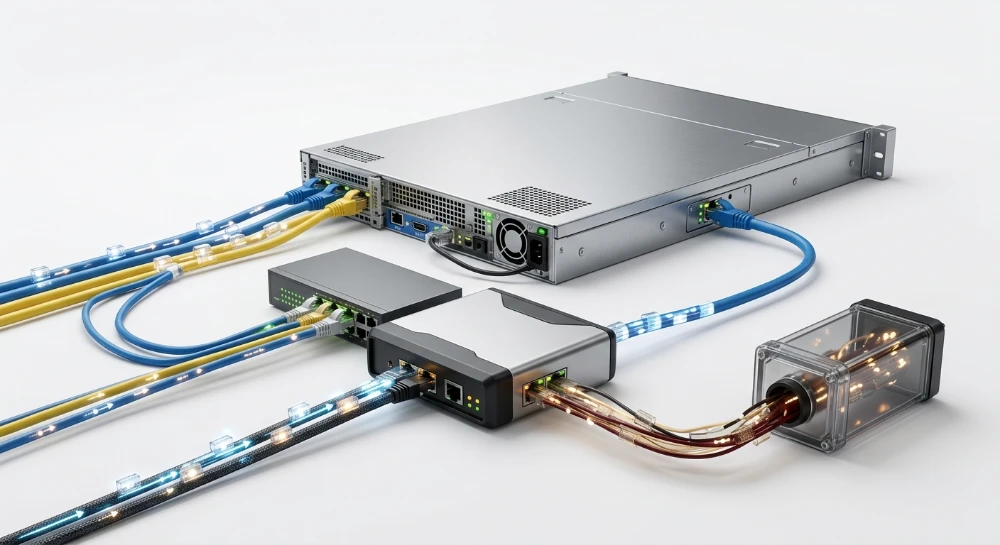
Malicious network requests impersonating search engine crawlers deplete server compute resources and drain crawl capacity limits. Properly isolating infrastructure of a server stops traffic from fake Googlebot by terminating unverified HTTP requests at the edge before they trigger heavy CMS database queries. Automated scrapers masking their HTTP_USER_AGENT as 'Googlebot/2.1' often execute aggressive GET requests against pagination logic and search API endpoints. This specific attack vector accounts for up to 28% of server load overhead during high-traffic events.
The foundation of crawler verification relies entirely on Forward-confirmed reverse DNS protocols. FCrDNS executes a strict reverse IP lookup followed by a forward hostname match against the googlebot.com namespace. If the origin IP fails this handshake, the request is immediately flagged as spoofed.
Managing this operational overhead requires specific configuration layers. Cloudflare and AWS WAF rule engines process incoming packets against known ASNs, specifically AS15169 for Google infrastructure. Traffic originating outside these verified subnets triggers HTTP 403 Forbidden responses. Engineering teams must simultaneously audit Apache mod_log_config or Nginx access logs to quantify blocked requests. Tracking the ratio of HTTP 200 to HTTP 403 status codes establishes a baseline SEO metric for measuring crawl efficiency. Real-time log parsing prevents legitimate crawlers from hitting rate limits while actively dropping scraping algorithms targeting SERP data.
Protecting the server crawl budget ensures rapid indexing of new HTML content. This directly stabilizes CTR and protects ROI across organic search channels.
Infrastructure diagnostics identifying bot impersonation anomalies
System infrastructure reveals malicious scraping operations through distinct access log anomalies. Scraping bots routinely forge request headers to bypass basic security filters. The primary deception relies on manipulating the HTTP_USER_AGENT string. Attackers inject exact matches of Googlebot/2.1 or standard Mozilla/5.0 browser signatures into the payload. This string manipulation masks the true intent of the request. Engineering teams must mandate continuous analysis of these declared agents against unverified source IP addresses. A genuine crawler connects exclusively from owned, documented subnets. A spoofed request arrives from residential proxies, cloud compute instances, or hostile autonomous systems.
Detecting this discrepancy requires isolating specific access log parameters recorded during the HTTP transaction. Every unverified connection leaves a measurable digital footprint.
- Source IP Address. The remote client IP completely contradicts the expected autonomous system network for the declared agent.
- Spoofed Header Strings. The HTTP_USER_AGENT strictly matches Googlebot/2.1 or Mozilla/5.0 while originating from unrecognized commercial data centers.
- Request Frequency Patterns. Malicious clients execute high-density request bursts. They ignore standard crawl delays.
- Target Endpoints. Impersonators aggressively query search API routes and deep category pagination instead of standard HTML documents.
Scraping bots deploy specific bandwidth depletion vectors. They initiate hundreds of concurrent TCP connections simultaneously. This parallel execution model forces the origin server to keep worker processes continuously open. Available network throughput saturates rapidly. As the inbound queue fills, the application layer attempts to process massive volumes of complex CMS database queries triggered by the fake requests. Memory allocation spikes. Server strain variables compound until standard operations fail.
This operational overload directly exhausts crawl capacity limits. The infrastructure cannot differentiate between legitimate rendering requests and malicious scraping logic without strict IP verification. When the server reaches maximum capacity, the response architecture degrades. Access logs will record sudden spikes in specific error status codes.
| Diagnostic Metric | Technical Threshold Indicator | Impact on Infrastructure and SEO |
|---|---|---|
| Host Load Exhaustion | CPU and RAM utilization sustaining maximum limits during unexpected traffic spikes | Forces legitimate indexers to abandon current sessions and drastically lower future crawl demand. |
| 5xx Server Errors | High frequency of 502 Bad Gateway and 503 Service Unavailable status codes | Signals complete backend failure. Prevents the indexing of new URL assets and destroys crawl budgets. |
| 4xx Client Errors | Sustained blocks of 429 Too Many Requests and 404 Not Found responses | Indicates scrapers executing aggressive brute-force URL discovery against non-existent API routes. |
Host load metrics serve as the primary baseline for identifying severe server strain. A sudden deviation in average processing time per request correlates directly with bot impersonation attacks. Malicious actors force the server to allocate hardware resources to unverified source connections. This starves organic traffic. Diagnosing these patterns at the raw log level exposes the true operational cost of spoofed crawler traffic. Without isolating these specific anomalies, the infrastructure continuously burns bandwidth servicing automated extraction algorithms.
Run a deep technical crawl to identify 4xx errors, missing meta tags, and indexation blockers.
Access log extraction and parsing methodologies
Raw server logs contain the exact footprints of automated extraction sequences. Analyzing these text files directly bypasses the filtering delays inherent in commercial analytics suites. Native Nginx access logs and Apache mod_log_config outputs record every connection attempt. Extraction must target three specific parameters to build a spoofing profile. You need the remote_addr, the HTTP_USER_AGENT, and the bytes transferred per request.
Command line interfaces provide the fastest processing times for gigabyte-level server logs. Pipelining native bash utilities eliminates the need to upload massive datasets to external processing servers. The grep utility isolates the initial target string. The awk command parses the space-delimited architecture of standard combined log formats to extract the required fields.
grep -i "googlebot" /var/log/nginx/access.log | awk '{print $1, $9, $10, $12}'This syntax pulls the remote_addr, the HTTP response status code, the bytes transferred, and the HTTP_USER_AGENT. Complex string matching requires regular expressions. Regex isolates specific user agent anomalies where malicious scripts attempt to append version numbers that mismatch official crawler documentation. Unusually high byte transfer totals coupled with specific user agent strings indicate aggressive scraping operations.
Log preprocessing and aggregation
Raw CLI outputs require structuring before deep analysis. Log pre-processing operations standardize disparate file formats into manageable data schemas. Enterprise log files scale rapidly during intense bot activity. Tools like the Semrush Log File Analyzer and Lumar digest these massive files and map the raw strings into actionable dashboards. For environments relying strictly on raw text manipulation, the GoogleAccessLog2CSV.pl script converts standard server access logs into structured CSV outputs.
- Semrush Log File Analyzer ingests raw Nginx logs to map crawler hit frequency against specific URL paths.
- Lumar processes large-scale log batches to visualize crawl architectures and identify orphan pages targeted by rogue scrapers.
- GoogleAccessLog2CSV.pl standardizes date formats and normalizes the HTTP_USER_AGENT string into discrete columns for database importing.
Constructing diagnostic data queries
Once logs are parsed into a structured format, targeted data queries reveal the underlying intent of the traffic. Validating crawler behavior requires filtering the dataset strictly by the HTTP method GET. Scrapers masquerading as search engine bots rarely execute POST or PUT methods. They operate almost exclusively via GET requests to siphon HTML payloads.
The core diagnostic query measures the ratio of HTTP 200 versus HTTP 404 response status codes. Legitimate bots follow established site structures and XML sitemaps. They yield a high volume of HTTP 200 responses. Spoofed traffic executes brute-force URL discovery sequences. This generates a disproportionately high volume of HTTP 404 errors as the scrapers probe for non-existent API endpoints or hidden directories.
| Query Filter Parameter | Observed Behavior Pattern | Diagnostic Interpretation |
|---|---|---|
| HTTP method GET | High frequency requests matching Googlebot/2.1 signature | Baseline filtering to isolate traffic attempting to index or scrape front-facing assets. |
| HTTP 200 vs HTTP 404 Ratio | Ratio skewed heavily toward HTTP 404 responses | Indicates aggressive brute-force directory traversal typical of Scraping Bots. |
| Bytes Transferred | Massive outbound data spikes on specific HTML routes | Points to full-page content extraction rather than standard header indexing. |
Analyzing the HTTP 200 versus HTTP 404 ratio clearly delineates organic crawling from malicious scraping. A standard search engine bot adjusts its crawl rate based on server response efficiency. Fake bots ignore these signals. They continue hammering the infrastructure with invalid requests, creating a massive footprint of 4xx client errors that can be isolated through basic log parsing logic.
Forward-Confirmed reverse DNS (FCrDNS) validation protocol
Relying on the HTTP_USER_AGENT string constitutes a critical architectural flaw. Identity verification requires network-level proof. The FCrDNS process provides this proof. It executes a precise three-step algorithmic handshake at the DNS level. This confirms the bi-directional mapping between an IP address and its declared hostname. System administrators utilize this workflow to definitively eliminate PTR record spoofing.
| Validation Phase | Execution Action | Expected Output Pattern |
|---|---|---|
| Step 1: Reverse DNS Lookup | Query the suspicious origin IP address to extract the associated PTR record. | A valid hostname pointing back to the infrastructure owner. |
| Step 2: Hostname Verification | Apply string matching against the extracted PTR record. | Strict suffix match against verified domain parameters. |
| Step 3: Forward DNS Lookup | Query the extracted hostname to resolve its associated IP addresses. | An IP address that perfectly matches the original origin IP. |
To execute the first phase, run a reverse-DNS lookup against the suspicious source IP. Server administrators utilize CLI toolkits like Dig or nslookup. Programmatic environments handle this directly via gethostbyaddr. The objective is to isolate the PTR record associated with the incoming connection.
dig +short -x 66.249.66.1The resulting output must undergo strict string validation. You must mandate validation that the PTR hostname strictly ends in .googlebot.com or .googleusercontent.com. Any deviation indicates a spoofed node. Threat actors frequently register deceptive domains. A malicious scraper might return a PTR record like crawl-googlebot.com. This fails the strict suffix match requirement and immediately flags the request as invalid.
Attackers can trivially forge a PTR record to point to a legitimate domain. This vulnerability necessitates the third step. Execute a forward DNS lookup on the extracted hostname.
nslookup crawl-66-249-66-1.googlebot.comCompare the output of this forward lookup with the original source IP. The bi-directional loop must close perfectly. If the forward lookup returns a different IP address, or fails to resolve entirely, the traffic originates from an impersonator. The FCrDNS validation is complete only when the IP origin match is mathematically confirmed.
Addressing validation edge cases
Standard crawler operations follow the strict FCrDNS logic mapped above. Distinct infrastructure components require localized validation parameters. Specific utilities maintain disparate IP pools. These do not resolve to the standard primary hostnames. Handling these validation edge cases requires mapping against official data endpoints.
- special-crawlers.json provides mapping data for specialized product crawlers operating outside the primary indexing pool.
- user-triggered-fetchers-google.json tracks IP origins for user-initiated diagnostics like rich results testing or site speed API tools.
Integrate automated parsers to fetch these JSON endpoints. Cross-reference the unverified IP against these validated blocks. This systemic logic prevents dropping legitimate utility requests that execute outside the standard network footprint.
Detect stealthy removals, nofollow tag injections, and altered anchors instantly.
Executing Server-Side access control lists (ACLs)
Unverified connections identified during DNS validation must be dropped immediately at the server infrastructure level. Allowing impersonators to execute application code drains resources. Deploy server-side ACLs to reject this traffic outright. The primary directive dictates mandating the enforcement of HTTP 403 forbidden errors for unverified crawler traffic. An HTTP 403 status code terminates the connection before the server renders the payload.
Apache web server routing configurations
Apache deployments manage traffic routing through htaccess files. You must enable mod_rewrite to process these access directives. The module evaluates incoming request headers against predefined routing parameters. Configure RewriteCond directives to isolate specific user agents, followed by a RewriteRule to execute the block.
RewriteEngine On
RewriteCond %{HTTP_USER_AGENT} Googlebot [NC]
RewriteCond %{REMOTE_ADDR} !^66\.249\.66\.1$
RewriteRule ^ - [F,L]
The first condition identifies requests claiming the official web crawler user agent. The second condition checks the incoming IP address. The exclamation mark negates the match, targeting any origin failing to match the verified IP. The F flag in the RewriteRule enforces the HTTP 403 forbidden error. The L flag halts further rule processing. Modifying server files for every new hostile IP creates severe administrative bottlenecks. Application-layer evaluation provides necessary dynamic control.
Application-Level IP validation logic
Dynamic environments handle IP address validation logic directly within the application code. This architecture eliminates the need to constantly restart web server services when updating verified IP pools. PHP scripts capture the connecting client origin utilizing the global server array.
$client_ip = $_SERVER['REMOTE_ADDR'];
$client_agent = $_SERVER['HTTP_USER_AGENT'];
if (strpos($client_agent, 'Googlebot') !== false) {
    if (!in_array($client_ip, $verified_ips)) {
        http_response_code(403);
        exit();
    }
}
This script halts execution instantly. Python applications follow identical validation architecture within middleware components.
def process_request(request):
    client_ip = request.META.get('REMOTE_ADDR')
    client_agent = request.META.get('HTTP_USER_AGENT', '')
    if 'Googlebot' in client_agent:
        if client_ip not in verified_ips:
            return HttpResponseForbidden()
    return None
Extracting the origin IP at the application layer ensures only verified connections reach the database query execution phases. Unverified scrapers receive a fast HTTP 403 response, preserving server capacity.
Automated network block operations and CIDR implementation
Single IP blocking fails at scale. Scraping networks rotate addresses across vast subnets dynamically. You must implement automated Network Block operations targeting identified malicious IP ranges.
Automating network blocks requires a rigid execution sequence.
- Extract the unverified IP from the access log payload.
- Execute a WHOIS lookup to identify the autonomous system and assigned subnet.
- Convert the isolated hostile network into a CIDR format block.
- Append the CIDR notation to the automated ACL configuration.
CIDR format groups contiguous blocks of IP addresses into a single routing rule. This drastically reduces the computational overhead of parsing extensive server access lists. The following table compares mitigation scopes between single IP targeting and scalable CIDR formatting.
| Network Targeting Protocol | Syntax Example | Mitigation Scope |
|---|---|---|
| Single Host Block | Require not ip 192.168.1.50 | Isolates one specific origin address |
| Subnet Block (Class C) | Require not ip 192.168.1.0/24 | Blocks 256 sequential network addresses |
| Broad Range Block (Class B) | Require not ip 10.0.0.0/16 | Blocks 65536 sequential network addresses |
Integrate these CIDR blocks directly into Apache access control modules. Utilize the core authorization directives to explicitly deny access to known scraping subnets.
<RequireAll>
    Require all granted
    Require not ip 192.168.50.0/24
    Require not ip 10.12.0.0/16
</RequireAll>
Log parsing scripts continuously aggregate HTTP 403 instances. When a specific subnet generates excessive rejected requests, the script updates the CIDR block list automatically. This closes the loop on server-side mitigation protocols.
Edge-Level mitigation and WAF rule engine configurations
Processing unauthorized crawler traffic at the origin server still consumes processing cycles and network bandwidth. Shifting mitigation to the network edge resolves this architectural flaw. WAF platforms intercept and inspect incoming requests before they reach your infrastructure. Deploying Cloudflare firewall, AWS WAF, or HAProxy Enterprise establishes an external perimeter to drop spoofed agents.
Routing traffic through an edge network alters how the origin server reads visitor data. Standard configurations log the proxy node IP instead of the original client address. This breaks internal routing rules. System administrators must configure the origin environment to extract the true visitor IP from the request headers injected by the edge provider. In PHP environments operating behind a proxy, replace standard remote address calls with the specialized header parameter.
$client_ip = $_SERVER['HTTP_CF_CONNECTING_IP'];Constructing the rule engine prerequisites
Effective WAF deployment relies on precise rule sets that cross-reference multiple network data points. Relying solely on agent strings is insufficient. Modern rule engines combine ASN mapping, behavioral thresholds, and predefined threat intelligence variables. Build firewall conditions that evaluate these parameters simultaneously.
| Validation Parameter | Engineering Logic | Execution Action |
|---|---|---|
| VERIFIED_BOT_CATEGORY | Utilizes provider threat intelligence to confirm known search engine nodes. | Bypasses standard rate limits and challenge pages. |
| ASN mapping (AS15169) | Isolates traffic originating strictly from the Google LLC autonomous system network. | Authorizes requests claiming Googlebot association. |
| HTTP_USER_AGENT discrepancies | Flags requests claiming official crawler status from unverified hosting providers. | Drops connection for mismatched ASN and agent string data. |
If a request claims a recognized search crawler agent but originates from an ASN outside of AS15169, the WAF must execute an immediate block action. This logic neutralizes impersonators instantaneously. The connection drops before consuming origin resources.
Rate limiting and threat mitigation logic
Aggressive scraping operations distribute requests across thousands of nodes to evade standard blocks. Activating Bot Fight Mode introduces computational hurdles designed to stall automated scripts. Legitimate search indexers bypass these challenges automatically via internal platform whitelists.
Rate limiting configurations protect the origin from volumetric scraping bursts. Define crawl-rate limit parameters based on historical baseline metrics to drop fake agents.
- Match conditions: Target traffic explicitly falling outside the VERIFIED_BOT_CATEGORY.
- Action threshold: Trigger a block when a single IP exceeds standard browsing patterns, typically mapped to high-frequency GET requests.
- Mitigation timeout: Lock the offending network out of the zone for a sustained period to break the scraping loop.
- Response action: Serve an HTTP 429 status code or drop the TCP connection entirely at the edge.
Executing these parameters at the edge prevents unauthorized scrapers from establishing a connection with the origin. The server operates efficiently. System resources remain dedicated to legitimate user requests and verified crawler indexing tasks.
Bulk Google and Yandex index checker
Verify agency reports and track live SERP status in Google and Yandex to protect your SEO ROI.
Measuring mitigation impact on crawl efficiency and technical SEO
Once mitigation rules propagate across the edge layer, network telemetry demands immediate validation. System logs will shift rapidly. The objective is quantifying the exact resource recovery achieved by severing connections to impersonators. Server bandwidth drops. Concurrent connection limits stabilize. You must audit specific data pipelines to confirm that crawl budget allocations flow exclusively to legitimate indexing agents.
Analyzing crawl stats and demand recovery
Load up Google Search Console. Navigate straight to the Settings panel and open the Crawl Stats report. This interface exposes Googlebot interaction patterns post-deployment. Look for a distinct drop in the host issues category. High server load caused by spoofed agents previously triggered 5xx errors, forcing legitimate crawlers to back off. With those vectors neutralized, the origin handles incoming requests efficiently. Crawl demand optimizes organically.
Track the total crawl requests timeline over the observation window following mitigation to verify systemic health.
- Verify the average response time metric drops sharply as junk traffic vanishes.
- Confirm the response distribution shows HTTP 200 codes dominating the aggregate chart.
- Check that 503 Service Unavailable occurrences flatten entirely to zero.
- Audit purpose data to ensure Refresh and Discovery crawls trend upward.
Crawl budget restoration depends on server stability. When fake bots hammer the database, Google perceives the server as struggling. Dropping those malicious requests frees up capacity. Googlebot detects the improved response times. It scales up its crawl rate to index new URL structures and updated HTML content faster.
Validating response code routing logic
Routing accuracy determines SEO stability. Blocking a verified crawler breaks indexing. You must prove the WAF and server ACLs apply the correct HTTP status codes to specific agent classifications. Pull a fresh batch of server access logs. Execute granular queries isolating the target USER_AGENT strings alongside their assigned response codes.
Compare your server log outputs against the baseline routing expectations to confirm architectural integrity.
| Traffic Classification | Expected HTTP Status | Origin Server Impact | SEO Implication |
|---|---|---|---|
| Verified bots | HTTP 200 | Normal resource consumption | Consistent SERP indexing |
| Google Threat Intelligence Group | HTTP 200 | Normal resource consumption | Security scanning operational |
| Spoofed IPs matching Googlebot | HTTP 403 | Zero load (blocked at edge) | Crawl budget protected |
| Commercial Scraping Bots | HTTP 403 or 429 | Zero load (dropped connection) | Content scraping halted |
Sustained HTTP 200 delivery for legitimate agents proves the FCrDNS validation logic works. Accurate HTTP 403 response routing for bad bots confirms the ACLs are successfully matching unverified network parameters. The separation between these two streams must be absolute.
Final log file analysis for impersonation eradication
Run a terminal session to parse the latest log batches. The goal is confirming the complete eradication of Non-human traffic impersonation attacks at the origin level. If the edge rules function correctly, malicious IP ranges will not even register in the backend Apache or Nginx logs. They die at the firewall.
Execute CLI extraction to audit any residual spoofed traffic that bypassed the edge and reached the origin.
awk '($9 ~ /200/) {print $0}' access.log | grep -i "googlebot" | awk '{print $1}' | sort | uniq -cCross-reference the output IPs against your validation scripts. Zero unverified IPs should return an HTTP 200 status. Any anomalies indicate a leaky WAF rule or bypassed edge infrastructure. Monitor the host machine CPU load averages and memory swap usage. Server load reduction manifests as a sustained drop in base resource consumption within hours of deploying the block logic. The infrastructure stops processing garbage requests. Resources sit ready for actual users and verified crawlers, directly boosting ROI on hardware infrastructure.