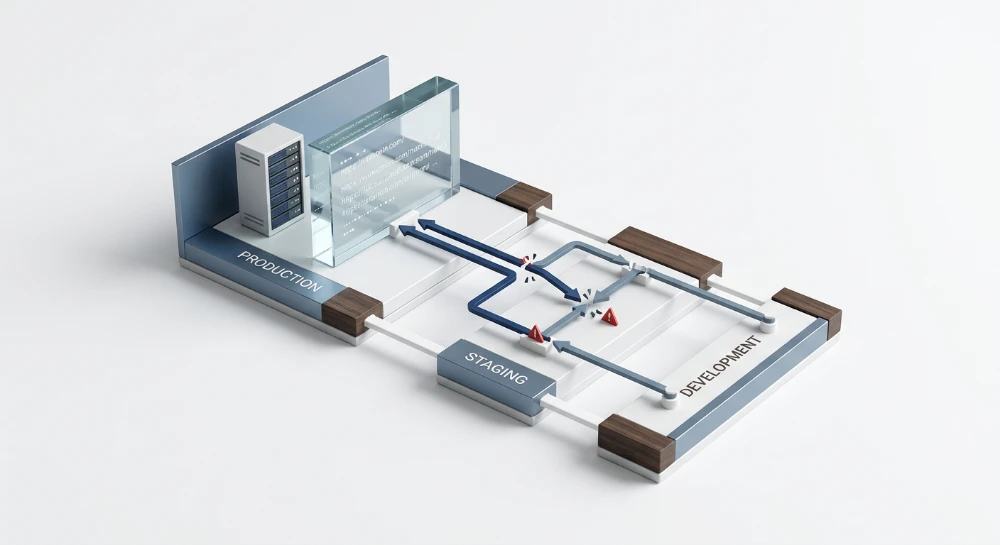
Understanding exactly why category silos break when using non self referential canonicals requires analyzing the parsing behavior of Googlebot during the URL consolidation phase. An omission of a self-referencing rel="canonical" tag on a primary node forces search algorithms to interpret parameterized variables as equal versions of the root page. This architectural error misdirects PageRank computation across the entire index.
A missing self-referencing tag strips a category page of its absolute identity. When sorting scripts append strings like ?sort=price to a path, the indexer groups these generated pages without a clear primary directive. PageRank flows laterally into faceted navigation links instead of distributing vertically into defined subcategories. The node loses its calculated entity weight within the hierarchy. Topical Authority drops directly because the semantic relationship between the parent directory and its dependent child clusters fragments across multiple undefined states.
The Google Search Central guidelines define the canonical link element as a strict requirement to establish a preferred version among duplicate sets. Omitting this HTML instruction forces the indexing pipeline to select an arbitrary primary target based on external link equity and XML sitemap prioritization. SERP rankings collapse. Sites exhibiting this exact structural misconfiguration routinely record a 20 to 40 percent decline in organic CTR for core head queries due to strict keyword cannibalization metrics.
Architectural fundamentals: SEO silos and canonical constraints
Physical SEO silos enforce category hierarchy strictly through the URL path directory structure. A root domain branches into defined subdirectories, mapping the content hierarchy directly to the server file path. Crawlers parse this structure linearly. Virtual SEO silos operate independently of URL paths, relying entirely on the internal link graph to establish semantic relevance between disparate pages. Both architectural frameworks demand rigid control over node consolidation. System failures occur when indexers cannot distinguish the primary category from dynamic URL variants generated by user filtering.
The canonical link element operates as the primary logical node consolidator within any technical architecture. It locks the category root in place.
When parameter-driven duplicates generate during user sessions, the canonical tag aggregates the dispersed ranking signals. It funnels them back to the primary category node. PageRank calculation paths require this pristine structural integrity to distribute link equity efficiently across isolated product clusters. Equity must flow vertically from the parent category down to specific item pages. It then loops back via breadcrumb navigation. Lacking a rigid identifier, this vertical flow bleeds horizontally into faceted filters, diluting the mathematical weight of the entire cluster.
Deploying a structurally sound category architecture requires strict adherence to specific HTML parameters to prevent index fragmentation.
- Explicit rel="canonical" definitions must exist on every primary category and subcategory page to declare the authoritative indexation target.
- Absolute URLs must be utilized within the href attribute, completely prohibiting relative path structures that crawlers might append incorrectly.
- Root Domain paths must enforce protocol and subdomain consistency, strictly dictating HTTP or HTTPS alongside WWW or non-WWW variants within the tag value.
Omitting a self-referencing canonical tag on subcategories triggers immediate architectural degradation. The subcategory node loses its structural anchor. Search algorithms process appended query strings as distinct entities, isolating them from the main product cluster.
| Architectural Component | With Self-Referencing Canonical | Omitted Self-Referencing Canonical |
|---|---|---|
| Node Consolidation | Forces parameter URLs to merge into the root subcategory. | Splits subcategory equity across multiple dynamic variants. |
| PageRank Distribution | Vertical flow remains concentrated within the product cluster. | Horizontal bleed into sorting filters and faceted navigation. |
| Category Hierarchy | Maintains rigid parent-child semantic relationships. | Flattens the architecture, confusing crawler priority logic. |
This structural fracture forces the indexer to continuously evaluate near-identical pages against each other. Processing capacity wastes on parsing undefined subcategory variants instead of discovering new product nodes. The mathematical relationship defining the SEO silo breaks at the exact point of the omitted tag.
Run a deep technical crawl to identify 4xx errors, missing meta tags, and indexation blockers.
Mechanisms of silo degradation via consolidating algorithmic conflicts
A Canonical Non Self Referencing deployment fundamentally corrupts cluster integrity. The indexer processes the directive and immediately reallocates the ranking weight of the node to the declared target. This severs the vertical axis of the architecture. Pointing a category canonical outside the strict cluster flattens Semantic Depth entirely. The crawler processes the subcategory as redundant content rather than a unique entity. The mathematical relationship defining the parent-child hierarchy collapses.
Google's consolidation algorithm mechanics operate on probabilistic node clustering. The system evaluates the provided canonical tag against content parity, internal linking proximity, and physical directory depth. If the declared canonical value points away from the active node without architectural justification, the algorithm flags a logic conflict. It pauses standard indexing protocols to resolve the discrepancy through automated fallback evaluation. The webmaster loses control over the node.
Algorithmic transition into keyword cannibalization
This conflict initiates a rapid degradation cycle across the SERP. The crawler systematically drops the intended category from the primary index. The transition from preferred URL indexing to Keyword cannibalization happens autonomously. Search queries that should trigger the dedicated category node instead return scattered parameter variants or parent directories. Multiple weak URLs compete for the exact same query.
System administrators must track specific failure indicators to catch this collapse before severe traffic loss occurs.
- Index Bloat indicates the algorithm is rejecting the conflicting canonical directive and indexing dynamic URL parameters as distinct entities.
- Ranking Signals deviation occurs when backlink equity splits horizontally across multiple dynamic variants instead of flowing vertically down the cluster.
- Organic Performance latency manifests as delayed SERP updates, where the crawler restricts its crawl frequency due to processing heavy logic conflicts.
Duplicate-Content protection failures
Canonical tags act as the primary protocol against duplicate content filtering mechanisms. Duplicate-content Protection failures trigger when canonical values diverge from URL path structures. The indexer relies on strict path consistency to validate relationships between similar items. If a category URL path maps to a specific product attribute but the canonical target maps to an unrelated sibling node, the protection mechanism fails completely.
| System Failure State | Algorithmic Interpretation | Architectural Result |
|---|---|---|
| Divergent Canonical Target | Crawler assumes intentional entity merging. | Permanent loss of dedicated node ranking potential. |
| Orphaned Parameter Variants | Filters fail to consolidate dynamic strings. | Massive Index Bloat across the entire domain. |
| Signal Splitting | Equity divides randomly between physical and canonical targets. | Severe Ranking Signals deviation and visibility drops. |
The indexing system stops trusting user-declared directives. It defaults to analyzing raw text nodes and on-page links to determine the primary version. This automated selection rarely aligns with the intended SEO strategy. Correcting these failures demands absolute alignment between the physical URL path and a strict self-referencing directive. The algorithm requires definitive, unambiguous signals to restore cluster isolation.
Ecommerce CMS parsing failures: Shopify, Magento, and parameter handling
Default dynamic URL generation protocols within enterprise CMS platforms inherently conflict with strict silo architecture. Out-of-the-box configurations in Shopify and Magento 2 routinely broadcast conflicting indexing signals. The routing logic favors user experience over search engine indexing rules. This system failure creates an immediate technical bottleneck. The crawler receives multiple path variants for a single physical node.
Shopify render logic and metafields configuration
Shopify constructs product paths dynamically based on user navigation. Accessing an item through a category generates a URL containing the specific collection path. The system renders this dynamic string while pushing a canonical tag pointing back to the root product path. This splits the signal. The crawler detects the internal link pointing to the collection variant while the canonical points elsewhere.
Remediation requires direct modification of the theme liquid file. The default configuration calls the standard URL object. This object parses the active session route. When dealing with complex category trees, standard liquid objects fail to output correct self-referencing tags for custom silo structures. Engineers must map specific Shopify metafields to override the default logic. Creating a custom namespace allows the assignment of static canonical targets. These targets ignore active navigation parameters.
Overriding default outputs
The conditional logic below replaces the dynamic object with a strict structural definition.
{% if template contains 'collection' and collection.metafields.seo.canonical %}

{% else %}

{% endif %}
This rendering execution forces the node to reference its exact structural position. It overrides query strings appended by the CMS parsing engine.
Magento parameter handling and faceted navigation
Magento 2 natively generates massive index bloat through its Layered Navigation modules. Faceted Navigation introduces multiple dynamic variants for identical grid views. The platform relies heavily on URL Parameters to manage states. Sorting Parameters and Filtering Parameters append endless key-value pairs to the root category path. Tracking Parameters injected by external marketing platforms compound the issue. Session IDs leak into the path structure during cache bypass events. Trailing-slash Inconsistencies occur when the rewrite engine fails to resolve slash enforcement on parameterized routes.
The following table maps the correlation between parameter generation triggers and the resulting architectural flaws.
| Parameter Class | Generation Trigger | Architectural Flaw |
|---|---|---|
| Sorting Parameters | User modifies grid display order. | Generates duplicate grid layouts with unique paths. |
| Filtering Parameters | Faceted search refinements applied. | Creates highly specific thin-content sub-nodes. |
| Tracking Parameters | External ad network click-through. | Bypasses page cache and splits node authority. |
| Session IDs | Cookie block or application server error. | Produces infinite URL variations per user visit. |
These parameters alter the physical path but rarely trigger a canonical tag update out of the box. The indexer consumes thousands of parameter combinations. The primary version loses indexing priority. The cluster fragments into isolated orphaned pages.
Modifying XML sitemaps and crawl directives
Relying exclusively on the HTML document header is a flawed defense mechanism against aggressive CMS parsing behaviors. You must implement server-level blockades to preserve crawl budget and enforce strict node consolidation. Code modifications required in XML Sitemaps involve stripping all dynamic properties prior to generation. The sitemap generation script must validate every entry against the primary canonical database.
The following deployment phases isolate the primary version during sitemap generation.
- Extract the core product path from the database query bypassing the frontend routing layer.
- Strip tracking variables and session identifiers from the generated path string before appending the root domain.
- Compare the final string output against the canonical definition table.
- Exclude any URL containing query parameters from the final document tree.
A CMS-generated duplicate bypassing the filter creates a massive contradiction. An entry in the sitemap acts as a secondary indexing signal. Including parameterized or collection-aware paths in the file overrides the primary version.
Modify the robots file to explicitly deny crawl access to dynamic structural variants. Server administrators must configure query blockades using strict parameter exclusions. This prevents the crawler from discovering CMS-injected strings.
User-agent: Googlebot
Disallow: /catalogsearch/
Disallow: /checkout/
Clean-param: sort
Clean-param: filter
Clean-param: SID
These directives cut off the parameter combinations at the source. The indexer never parses the duplicate nodes. The strict path consistency required for successful cluster isolation remains intact.
SEO structure and reciprocal link analyzer
Detect orphan pages, deep click depths, and toxic reciprocal links built by careless agencies.
Diagnosing indexability and URL consolidation in Google search console
Server-side execution of parameter filters requires validation against actual search engine indexing behavior. GSC serves as the definitive readout for how algorithmic processing layers interpret the cluster architecture. Direct log data confirms whether the structural mandates hold under crawler pressure.
Executing diagnostic algorithms via GSC URL inspection tool
The GSC URL Inspection Tool strips away frontend rendering illusions. It exposes the raw indexability state of any specified path within the database. Input a parameterized category URL. Review the coverage block.
Extracting the Indexability Audits data reveals the exact decision matrix the engine applied to the document. Two specific fields dictate the architectural health of the silo. The User-declared Canonical metadata displays the tag parsed directly from the HTML source. The Google-selected Canonical metadata outputs the final path the indexer actually consolidated equity into.
A mismatch between these fields confirms a severe technical error. The engine overrides the structural directive.
Isolating page indexing status responses
The Page Indexing report categorizes indexation behavior into distinct processing buckets. Technical auditing requires filtering this raw data to isolate specific consolidation overrides affecting the structural hierarchy.
The following table maps exact GSC output statuses to their architectural impact.
| GSC Status Output | Technical Diagnostic Meaning | Silo Architecture Impact |
|---|---|---|
| Alternate Page with Proper Canonical Tag | The crawler identified a secondary path and successfully collapsed it into the user-declared target. Consolidation logic executed as engineered. | Positive. Parameterized variants are successfully excluded from the index while passing discovery signals to the root node. |
| Duplicate Google chose different canonical than user | The algorithm rejected the declared target and forced consolidation onto a different node entirely. Catastrophic system failure. | Negative. Link equity flows to an unintended destination. The intended category root is bypassed and stripped of topical relevance. |
The Alternate Page with Proper Canonical Tag status confirms a healthy consolidation threshold. The engine respects the boundaries set by the technical architecture. Duplicate Google chose different canonical than user indicates that internal signals contradict the user-declared directive.
Correlation between canonical missing instances and index dropping
Missing tags trigger chaotic indexing behavior. When parsing a path with a Canonical Missing status, the crawler loses its primary consolidation directive. The engine defaults to algorithmic guesswork.
This data maps directly to non-indexable pages statuses within the interface. Without a definitive self-referencing signal on the root node, the crawler frequently categorizes the primary page as a duplicate of a parameterized variant possessing higher internal link velocity. The engine drops the intended cluster root entirely. Traffic plummets. The semantic relationship between the parent category and its child products breaks at the database level.
Bulk export protocols for technical SEO auditing
Interface spot checks fail to scale across enterprise platforms. Diagnosing pattern-level architectural flaws requires raw dataset manipulation. Extracting the full indexing state enables granular pivot table analysis against the application database structure.
Execute the following extraction process to compile the diagnostic baseline.
- Navigate to the Page Indexing report within the GSC interface.
- Select the specific non-indexed reason isolating the consolidation failure.
- Trigger the export function located above the primary data table.
- Extract the raw CSV file to cross-reference URL strings against the primary canonical database.
This bulk export drives the technical SEO auditing sequence. Analyzing the raw URL strings uncovers exactly which CMS parameters or category path variations trigger the consolidation bypass. Teams can then write specific exclusion rules based on the precise query strings the crawler surfaces.
Crawler diagnostics: Log file analysis and crawl budget bottlenecks
Server logs expose the exact traversal paths Googlebot executes across the site architecture. Identifying URL consolidation failures requires raw server data cross-referenced with synthetic crawl exports. Interface reports lag. Logs do not. Every HTTP request consumes server resources and allocated crawl allowance.
Configure diagnostic environments using Sitebulb MCP or Screaming Frog SEO Spider. The objective is simulating the exact parsing behavior of search engine crawlers while capturing canonical directives at scale. Set the user-agent strictly to Googlebot Smartphone.
Establish the following extraction parameters before initiating the site crawl.
- Enable strict URL canonicalization parsing to capture both declared and missing tags.
- Activate internal link extraction to map the exact pathways feeding into the cluster root.
- Configure the crawler to follow and report on redirect chains up to five hops.
- Store raw HTML for all indexable pages to verify tag presence post-crawl.
Crawl Budget saturation happens when system architecture traps the bot in endless evaluation cycles. Canonical Chains force the crawler to process sequential consolidation requests. Node A canonicalizes to Node B, which canonicalizes to Node C. Each hop burns resources. Canonical Loops occur when Node A points to Node B, and Node B points back to Node A. The engine abandons the entire path. Redirect Loops execute a similar destruction at the network level before the HTML even loads. System resources drain.
Status codes dictate Googlebot crawling time and resource allocation algorithms.
| HTTP Response | Crawler Action | Impact on Crawl Budget |
|---|---|---|
| 200 OK | Parses HTML and executes consolidation logic. | Baseline consumption. Expected server state. |
| 301 redirect | Follows the network path to the new destination. | High latency. Sequential redirects heavily deplete available crawl allowance. |
| 404 pages | Drops URL from the queue. | Wastes the initial request allocation. Dead end. |
| 5XX Server Error | Throttles request frequency to protect host infrastructure. | Critical failure. Halts cluster crawling entirely until error rates decrease. |
System failures compound when engineering teams deploy conflicting directives. Multiple Conflicting Canonicals occur when a single document contains differing tags. The CMS might generate one tag while a plugin injects another. Search engines discard both signals. The page defaults to raw algorithmic evaluation.
Canonical Target Noindex instances create an architectural paradox. A page requests consolidation to a specific URL. That target URL returns a noindex directive. The crawler receives instructions to pass equity to a node that refuses to exist in the index. The entire relationship collapses.
Isolate specific formatting flaws that break consolidation mapping. Document extraction protocols must filter the raw crawl data for distinct syntax anomalies.
- Filter the destination column for the hash symbol to identify Canonical URL Has Fragment instances. Fragments dictate scroll position, not unique documents.
- Query the dataset for strings lacking protocol and hostname to isolate Relative Canonical configurations.
- Export the filtered rows as a CSV for database reconciliation.
Cross-reference these extracted URLs with the server log files. Match the anomalous canonical paths against actual Googlebot hit frequencies. Pages returning 5XX Server Error or looping 301 redirect sequences with high hit counts indicate immediate architectural bottlenecks. This data isolates the exact CMS logic failures suffocating the product silos.
Build a semantic internal linking structure, eliminate orphan pages, and simulate PageRank distribution.
Remediation protocols: Restoring technical architecture and link validation
System restoration requires strict enforcement of consolidation directives across all server outputs. You must strip conflicting signals from the template files and force a singular, unambiguous path for indexation. The location of the directive dictates its parsing priority. Standard deployment relies on the head section of the HTML document. Place the tag as high in the source as possible. Search engine crawlers abandon parsing if they encounter consolidation signals outside the designated block.
Non-HTML assets demand a separate deployment protocol. PDF files, images, and downloadable documents cannot execute embedded code. Deploy the rel='canonical' HTTP header to consolidate these node types.
| Implementation Method | Target Asset Type | Syntax Requirement | Parsing Behavior |
|---|---|---|---|
| Head Section Tag | Standard web pages, CMS category templates | link element with strict href target | Evaluated during initial HTML fetch and subsequent DOM rendering phases |
| rel='canonical' HTTP header | PDF documents, server-generated files, API payloads | Link: target URL; rel="canonical" | Processed immediately upon server response before payload downloading |
Client-side execution introduces severe validation risks. Compare the Initial HTML source code against the Rendered DOM. Platforms relying heavily on client-side rendering often inject or modify directives post-load. This latency creates DOM-injected Canonical Outside Head errors. A raw crawl might display the correct self-referencing target, but the executed scripts shift the tag into the body or alter the destination string.
Extract both source versions. Run a diff sequence to isolate the modifications.
- Capture the raw server response using a command-line fetch tool to record the Initial HTML source code.
- Execute a headless browser pass to generate the fully Rendered DOM.
- Isolate the link elements in both outputs and cross-reference the destination strings.
- Rewrite the rendering logic to force static delivery of the directive if the script execution modifies the server-injected tag.
Eliminate Relative URL structures from all repository files. A directive pointing strictly to a path forces the crawler to resolve the base domain based on current context. This resolution process breaks when URL parameters or unexpected subdomain configurations enter the parsed string. Enforce Absolute paths exclusively. The destination value must contain the protocol, specific subdomain, strict path, and exact trailing character.
Post-deployment verification requires isolated testing of the adjusted clusters. Validate the updated XML output using a Sitemap Validator. Confirm the parsed nodes strictly match the enforced absolute paths deployed in the HTML templates. Any divergence between the sitemap declaration and the page-level directive causes an immediate indexing stall.
Schema injection must align perfectly with the target directives. A Schema Visualizer will expose mismatched identifier fields or URL declarations within the structured data payload that contradict the primary directive. The mainEntityOfPage property must point to the exact string specified in the consolidation tag.
Map the resolved directives against server-side redirects. A 3xx status code on a consolidated node triggers an architectural loop. Server-side redirects (3xx) alignments must be verified to ensure no intermediate hops exist between the directive and its final destination. The target must always resolve directly to a 200 OK status. Extract the current server mapping file. Test the HTTP headers of all target URLs to verify an unbroken sequence from directive to destination.